This letter first appeared in Soul Naked, Sylvia's newsletter. Read the original and subscribe on Substack.
Dear Readers,
I’m going to tell you a story that will wreck you in the best possible way.
Fair warning: There are no productivity hacks here. No manifestation techniques. No morning routines that will change your life. Just one story that might change how you see your own impossible choices.
A woman told me this in ceremony, and I’ve carried it ever since.
She came from a noble Italian family—the kind with a historic palace and bloodlines spanning centuries. We were discussing how trauma passes through family lines, creating actual modifications in DNA. But then she reminded me: blessings travel through generations too. Codes of generosity and illumination pass down just as surely as trauma.
Her family’s home sat at the center of German occupation in northern Italy, just outside Milan.
The stakes were biblical. Anyone caught helping Jews escape was executed in the public square. A family relative—a doctor—was killed exactly this way for providing medical care to the wrong person.
So here’s the moral Rubik’s cube her ancestor faced: his children or his conscience? Turn a blind eye to atrocity and teach them that survival trumps soul, or risk everything—including their lives—to do what was right.
Most of us will never face a choice this extreme. (Though we tell ourselves we’re making “impossible” decisions when we’re really just choosing between two good job offers or whether to text someone back.)
But here’s what I know: the divine loves an impossible problem. When you’re stretched in every direction, when there is no comfortable answer—that’s not a sign you’ve failed. That’s spiritual growth trying to happen.
The patriarch found his answer in the stables, right next to where the Nazi tanks sat gleaming in the sun.
He chose to hide Jewish families in his home at the center of the city. But feeding them was nearly impossible. The Nazis tracked every supply coming in and out. A family of five suddenly acquiring food for fifty? Instant execution.
His young children asked why. Why must we lie to our friends and keep this secret? Why are you risking our lives to save strangers?
His answer was simple: “If you do nothing in the face of evil, you become part of it.”
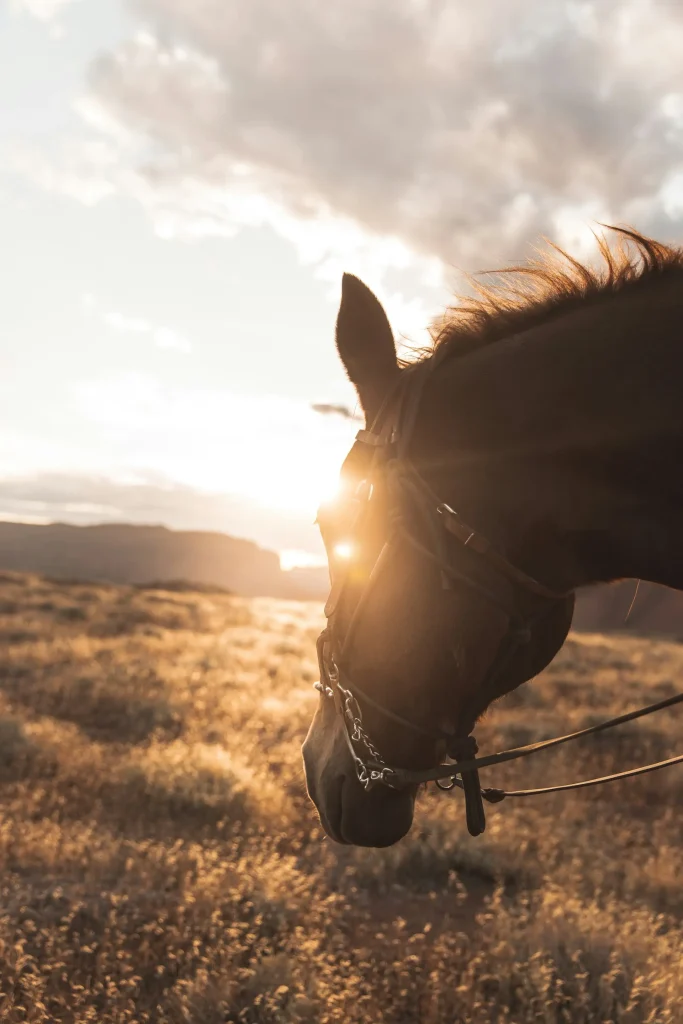
So he made a trade that would make any accountant weep: He began slaughtering his prized racehorses, one by one, to feed the souls passing through his home toward hopeful freedom.
These weren’t ponies from a petting zoo. These were exquisitely bred horses worth a fortune—his family’s wealth and legacy walking on four legs. And he turned them into food for strangers the Nazis were hunting.
The Nazis never noticed racehorses disappearing. Why would they?
A horse for Source. That was the exchange rate.
He had no idea what ripple effects his actions would create, how many souls he released from suffering, how many lives continued because of horses with elegant Italian names I’ll never learn to pronounce.
He just did what he knew was right.
Here’s what makes this story sing: It’s not about who’s the Jew or who’s the Catholic. It’s about one person who chose to ignite light, despite the cost.
The Kabbalists call this Tikkun Olam—”repairing the world.” They teach that divine light scatters throughout creation in broken shards, and our job is to find and elevate these sparks through right action, through conscious living. Each choice aligned with compassion liberates a spark, brightening the collective field.
Buddhism describes bodhicitta—the awakened heart-mind that vows to free all beings. The luminous nature of mind, where awareness itself is clear light.
The Qur’an speaks of God as An-Nur, “the Light of the heavens and the earth,” describing guidance as moving “from darkness into light.” A believer carries this light in the heart, illuminating character and action.
Hindu teachings describe Atman, pure consciousness, as “the light that illumines our minds and animates our existence”—the inner radiance we realize through practice and let flow into thought, speech, and action.
Jesus called himself “the light of the world” and then told his followers, “You are the light of the world… let your light shine before men.”
Every tradition points to the same truth: We are here to ignite light in whatever way we can.
So here’s my question for you: What are your horses?
What valuable thing are you being asked to trade—not for survival, not for comfort, but for Source? For light? For what you know in your bones is right?
I’m not talking about grand gestures. Most of us won’t face Nazis at our door. But we all face moments where the right action costs us something we value. Where being comfortable means being complicit. Where the divine whispers, “Here’s your impossible problem—grow.”
The patriarch risked everything for strangers. His life, his wife’s life, his three children’s lives. He didn’t know if his actions would work. He had no guarantee. He just had horses, hungry people, and a choice to be part of the light.
That’s enough.
That’s always been enough.
May we all have the courage to sacrifice our horses when our moment comes.
In Everything We Trust,
Sylvia