Dear Readers,
Money is never just money. It’s a mirror. It reflects our fears, our desires, our deepest beliefs about safety, worth, and power. Some people chase it. Others push it away. But very few have a truly peaceful relationship with it.
I’ve worked in finance almost as long as I’ve worked in healing, and I’ve seen this tension up close. I’ve sat with people who had more than they could ever spend yet still felt like it wasn’t enough. And I’ve met others with far less who moved through the world with a quiet sense of sufficiency. Wealth isn’t about numbers—it’s about stories.
So when a reader asked, Can you be spiritual and still welcome wealth? I knew exactly why that question cuts so deep. We’ve been taught that money either corrupts or that poverty is proof of purity. But what if neither is true?
In everything we trust,
Sylvia
Questions
Q
If every dollar is a vote for the future, how do we choose wisely? Can those of us in the healing, psychedelic, and spiritual spaces wield money as a force for transformation—without losing ourselves in the game of accumulation?
A
The question you’re asking is, at its core, a question of mindset. When it comes to money, there are two fundamental mindsets: scarcity and abundance.
The scarcity mindset is rooted in a lack of trust in the divine. It believes that safety and security are solely our own responsibility—that we must scramble frantically, always hungry, to remain secure. The abundance mindset, on the other hand, sees opportunity and potential in every circumstance. It trusts that everything, in time, will reveal itself as a blessing, even if it doesn’t seem like one in the moment.
But both scarcity and abundance have their cultural distortions. In the West, scarcity often carries an extra layer: the belief that to be spiritual, one must be poor. That serving the divine means working for little or nothing. We see this reflected in how poorly healers and spiritual guides are compensated.
Abundance, too, has been distorted—often confused with material excess. Particularly in Western culture, we’ve been conditioned to equate abundance with grand displays of luxury, rather than a true sense of sufficiency. We are all, in some way, operating within a framework of money that has been shaped by these distortions.
But there is a cure. It lies in healing your personal relationship with money—clearing the internal wiring that shapes how it flows through your life. If money is a current (which it is), then like any current, it moves best when the channel is open and unobstructed.
I invite you to take a deep inventory of your beliefs, scripts, and stories around money. Do an excavation of what you’ve inherited, what you’ve absorbed, and what no longer serves you.
As you unearth these beliefs, you create space. And in that openness, you have the power to rewrite your script.
At the heart of true abundance is this mantra:
I am enough. It is enough. I have enough.
The practice of exploring what “enough” truly means—and how it feels in your body—is a profound one. It is, in itself, a transmission.
Those who know—deep in their bones—that they are enough, that it is enough, and that they have enough, are the ones who engage with money in the healthiest way possible.
And while “enough” may look different for each person on the outside, it feels exactly the same on the inside.
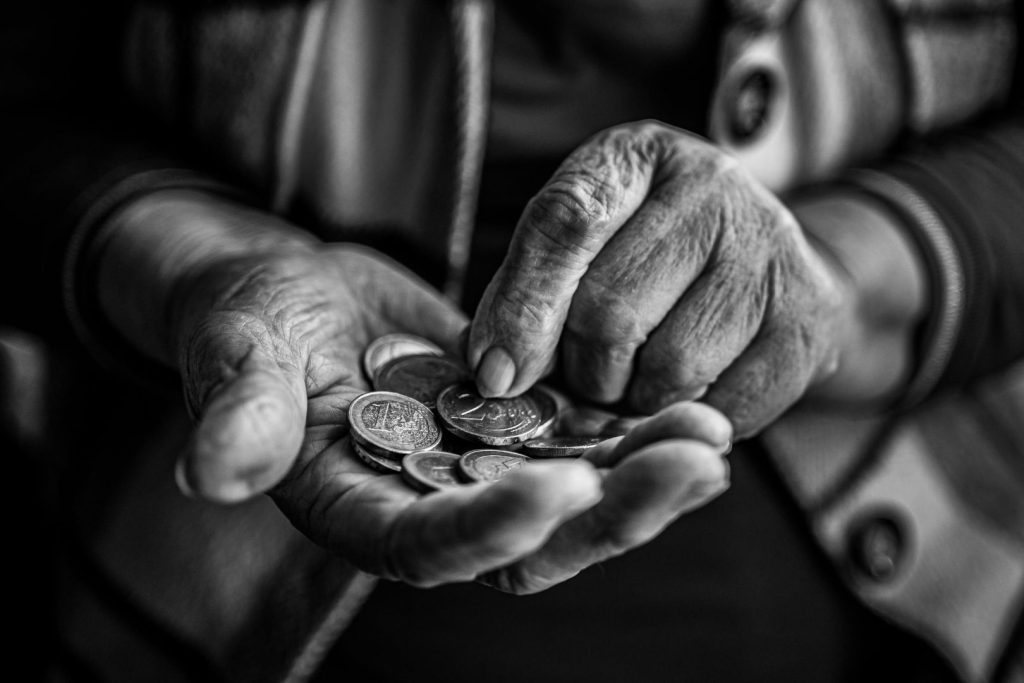
For one person, enough might be a peanut butter and jelly sandwich, eaten while sitting on the edge of a river. For another, it might be something more luxurious. But the inner feeling of sufficiency is the same.
I wish you great abundance in this lifetime—an abundance saturated in the deepening expression of enough.